How Much Does It Cost to Travel Australia in Retirement?
Published 10 October 2026 · 10 min read
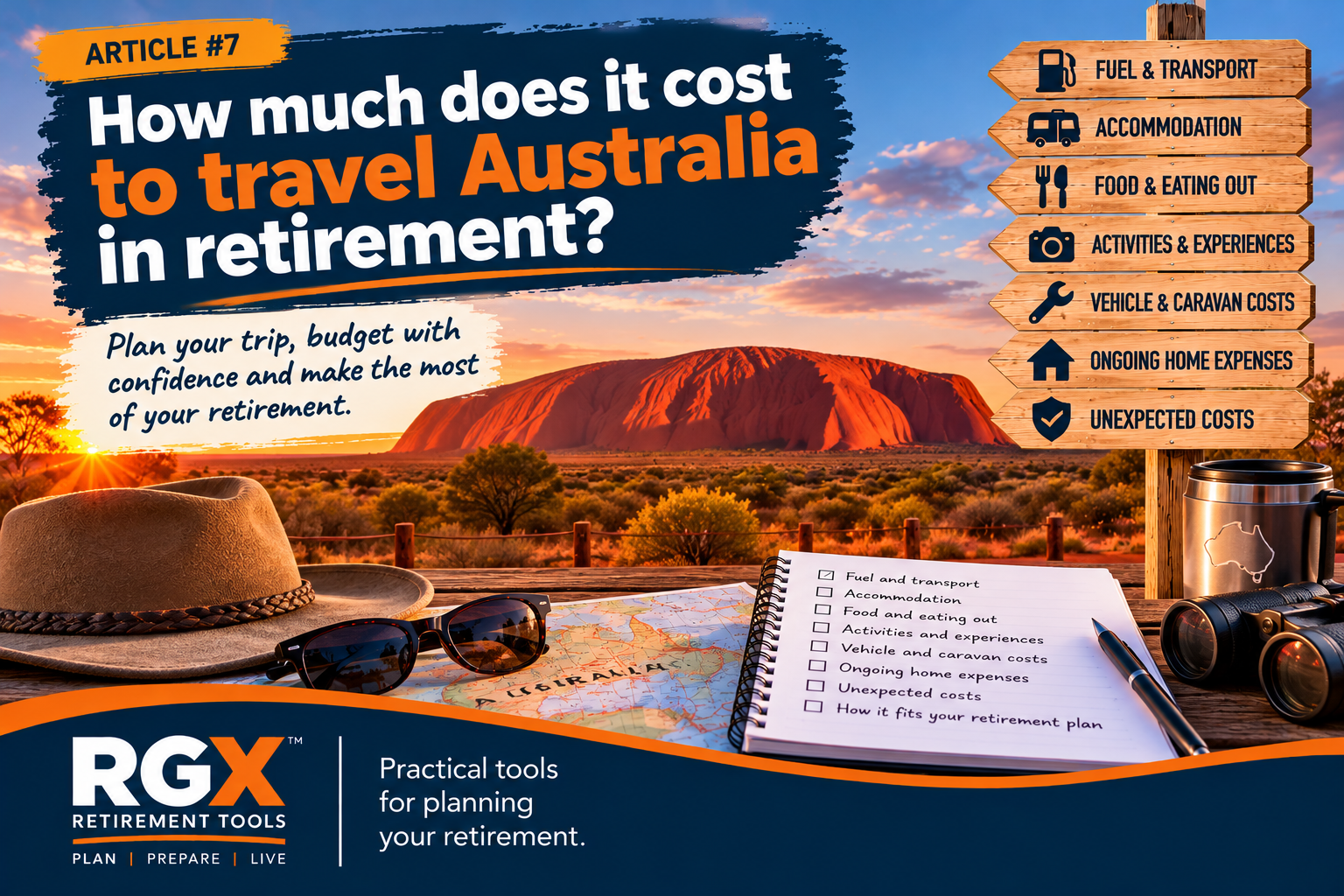
Planning a Big Lap, travelling with a caravan or exploring Australia at your own pace? Here's how to build a realistic retirement travel budget before you hit the road.
For many Australians, retirement brings the opportunity to do something they've been looking forward to for years. Maybe it's towing a caravan around Australia, exploring the Kimberley, spending winter somewhere warmer or finally taking that long-awaited Big Lap. But before you start planning the route, there's another question worth answering. How much is travelling Australia in retirement actually going to cost? The answer depends on how you travel, where you go, how long you're away and the lifestyle you want to enjoy. A couple travelling in a caravan for six months will have very different expenses from someone spending four weeks exploring Australia in hotels. The important thing isn't finding one magic number. It's understanding the costs that apply to your trip.
1. Start with the type of retirement travel you want
Before calculating your budget, think about what travelling in retirement means to you.
- Travel around Australia in a caravan or motorhome
- Take shorter road trips throughout the year
- Spend several months travelling before returning home
- Stay in holiday accommodation rather than caravan parks
- Combine Australian travel with occasional overseas holidays
Each option has different costs. For example, travelling in your own caravan may reduce accommodation expenses, but it introduces vehicle maintenance, registration, insurance and equipment costs. Staying in hotels removes some of those responsibilities but may increase your nightly accommodation expenses.
2. Calculate your fuel and transport costs
Fuel can be one of the biggest ongoing expenses of an Australian road trip. Your costs will depend on your vehicle, fuel consumption, distance travelled, whether you're towing and the fuel prices along your route.
Distance travelled ÷ 100 × fuel consumption × fuel price
Example: A retirement road trip.
Let's assume you're planning a 15,000-kilometre journey. Your vehicle averages 15 litres per 100 kilometres while towing, and you allow an illustrative fuel price of $2.00 per litre.
| Item | Budget assumption |
|---|---|
| Distance | 15,000 km |
| Fuel consumption | 15 L/100 km |
| Total fuel | 2,250 litres |
| Fuel price assumption | $2.00/L |
| Estimated fuel budget | $4,500 |
This is an example calculation, not a current fuel-price quote. Actual costs could be higher or lower depending on your vehicle, driving conditions, route and fuel prices. Allow additional room for sightseeing detours, local driving and unexpected changes to your route.
3. Don't underestimate accommodation expenses
Even when travelling with a caravan or motorhome, accommodation isn't necessarily free. Depending on your travel style, you may use a combination of caravan parks, holiday parks, permitted low-cost camping areas and occasional hotels.
- Powered and unpowered sites
- Holiday park fees
- Seasonal price increases
- Laundry and other park facilities
- Occasional motel or cabin stays
- Longer stays in popular destinations
For budgeting purposes, you might test several accommodation assumptions.
| Average nightly cost | 30-night and 90-night budgets |
|---|---|
| $25 average/night | $750 for 30 nights; $2,250 for 90 nights |
| $45 average/night | $1,350 for 30 nights; $4,050 for 90 nights |
| $70 average/night | $2,100 for 30 nights; $6,300 for 90 nights |
These are illustrative budgeting scenarios, not advertised caravan park prices. They demonstrate how accommodation choices can significantly change the overall cost of a trip. You can replace these assumptions with actual quotes from the places you intend to visit.
4. Remember the costs that continue while you're away
Just because you're travelling doesn't mean the expenses associated with your home disappear.
- Council rates
- Home and contents insurance
- Mortgage repayments, if applicable
- Electricity and other utilities
- Internet or telephone services
- Property maintenance
- Garden or pool maintenance
- Security arrangements
For some retirees, these expenses can be significant. You may effectively be maintaining two lifestyles: the one you're enjoying on the road and the one waiting for you at home.
Australian Government Moneysmart recommends considering ongoing housing, insurance, transport and other living expenses when developing a retirement budget. Moneysmart retirement-planning guidance
5. Allow for vehicle and caravan maintenance
A long Australian road trip can involve considerable wear on your vehicle and equipment. Depending on what you drive or tow, expenses might include servicing, tyres, mechanical repairs, batteries, caravan maintenance and replacement equipment. Don't assume that because everything is working when you leave, nothing will need attention while you're away. Consider keeping a separate maintenance and repair allowance. This is particularly important when travelling long distances or visiting remote parts of Australia.
6. Budget for food, activities and the experiences you want
Retirement travel should be about more than simply covering the essentials. After all, you're travelling to enjoy yourself.
- Everyday expenses: Groceries, takeaway meals, coffee, laundry and personal items
- Activities: National park visits, sightseeing tours, museums, boat trips and local attractions
- Special experiences: Scenic flights, guided tours, fishing charters or other activities you've always wanted to try.
One approach is to separate essential spending from optional experiences. That way, you can identify where adjustments might be possible without compromising the entire trip.
7. Include a buffer for unexpected costs
Even a carefully prepared travel budget won't predict everything. Unexpected expenses could include a mechanical breakdown, an urgent trip home, additional accommodation, replacing equipment or changing your travel plans. Rather than assuming everything will go perfectly, build a contingency allowance into your budget. For example, you could test an additional 10% or 15% of your estimated trip costs. These percentages are illustrative planning choices, not recommended universal amounts. The appropriate buffer will depend on your circumstances, existing emergency savings and the risks associated with your trip.
8. Example: What might a three-month Australian road trip cost?
Imagine a retired couple planning a 90-day road trip around Australia. They already own their vehicle and caravan. Their estimated travel expenses might look like this:
| Expense | Estimated amount |
|---|---|
| Fuel | $2,400 |
| Accommodation | $3,600 |
| Groceries | $2,250 |
| Eating out | $900 |
| Sightseeing and activities | $1,200 |
| Vehicle and caravan maintenance allowance | $750 |
| Laundry, communications and miscellaneous | $450 |
| Estimated travel expenses | $11,550 |
| Contingency allowance (10%) | $1,155 |
| Illustrative total | $12,705 |
That's approximately $141 per day over 90 days. But there's an important distinction. This is not a published average cost of travelling Australia. It's a worked budgeting example using assumptions that may or may not reflect your circumstances. It also excludes vehicle and caravan purchase costs, finance repayments and continuing household expenses. Your actual budget could be substantially different. The value of the example is showing how individual costs combine to create the total.
9. What about overseas travel in retirement?
While travelling Australia might be your immediate goal, overseas holidays could also be part of your retirement plans. An international travel budget may need additional categories, including flights, passports, visas, foreign exchange costs, overseas transport and travel insurance. Travel insurance deserves particular attention.
Australian Government Smartraveller advises travellers to consider their destination, trip duration, planned activities, age and health when choosing appropriate insurance. Some policies have age restrictions, exclusions or conditions relating to pre-existing medical conditions. Smartraveller travel-insurance guidance
Don't assume an existing credit card automatically provides adequate cover. Smartraveller reported changes to complimentary credit-card travel insurance in October 2026.
Smartraveller — Credit card travel insurance is changing
10. How does retirement travel fit into your overall retirement budget?
One of the biggest planning questions isn't simply whether you can afford a particular holiday. It's how that holiday fits into your broader retirement finances.
- Will you travel extensively during the first few years of retirement?
- Will your travel spending reduce as you get older?
- Are you planning one major trip or several smaller holidays?
- How will travel expenses interact with your everyday living costs?
- Could unexpected expenses affect future travel plans?
Your retirement travel budget shouldn't exist in isolation. It should form part of your overall retirement spending plan.
Moneysmart recommends considering retirement lifestyle goals, estimating living expenses and reviewing how spending may change over time. Moneysmart — Work out how much you need to retire
11. Make retirement travel planning easier with RGX-105
You don't need a complicated financial system to start organising your travel plans. But having your information together can make the process much easier. That's why Retirement GenX Tools developed the RGX-105 Retirement Travel Planner. It's designed to help Australians organise the practical details of retirement travel, including planning expenses and working through the costs associated with their trips. Rather than relying on scattered notes or trying to remember everything, you can approach your travel planning in a more structured way.
Explore the RGX-105 Retirement Travel Planner
Practical tools for planning your retirement.
Explore RGX-105Final thoughts: Plan the journey, not just the destination
Travelling Australia in retirement can be one of the most rewarding experiences of your life. But the freedom to enjoy it starts with understanding what it might cost. You don't need to know every expense before leaving home. You do need a realistic starting budget, an allowance for unexpected costs and a clear understanding of how travel fits into your retirement finances. Whether you're planning a Big Lap, a few months on the road or shorter holidays throughout the year, the principle remains the same. Plan the trip you want to take, understand the costs and give yourself room to enjoy the experience.
Frequently asked questions
How much money do I need to travel Australia in retirement?
There is no single amount. Your costs depend on your transport, accommodation, travel duration, route and lifestyle. Start by estimating each expense category rather than relying on someone else's total.
Is travelling Australia in a caravan cheaper than staying in hotels?
It can be, particularly for longer trips, but you also need to consider caravan purchase costs, maintenance, insurance, registration, fuel consumption and site fees.
What is the biggest expense when travelling Australia?
That depends on your travel style. Fuel, accommodation, food and vehicle costs can all be significant. Your own budget will show which categories matter most.
Should I include travel in my retirement budget?
Yes. If travel is part of your retirement plans, it should be included alongside your everyday living expenses and other financial commitments.
How can I prepare for unexpected travel expenses?
Consider setting aside a separate contingency allowance and reviewing your vehicle, insurance arrangements and planned expenses before leaving.
General information only. This article is general in nature and does not take your personal circumstances, objectives or financial situation into account. It is not financial, legal or taxation advice. Consider seeking advice from a licensed professional before making decisions about your retirement.